
Lying in bed with a tight neck, tense shoulders, or a lower back that refuses to settle makes falling asleep a lot harder, even when the day itself was not particularly stressful. A massage for muscle tension in Austin does more for sleep than most people expect, and we see this pattern often. Working through physical tension tends to be a more direct path to a better night’s rest than anything focused on sleep alone.
A body that is holding tension does not settle easily, even when someone is mentally ready to sleep. Tight shoulders, a clenched jaw, or a lower back that has been guarding all day sends a low-level signal that keeps the nervous system from fully downshifting. This is not the same as treating insomnia as a medical condition, but for a lot of our clients, physical tension is a real piece of why winding down feels harder than it should.
Clients who carry stress in a specific area, often the shoulders, neck, or lower back, notice this pattern most clearly. The tension builds through the day and is still there at bedtime, unresolved. We hear this description from new clients regularly, and it is usually the first sign that a targeted session, not just rest, is what the body needs.
Our DR Hit The Spot™ method works through seven specific zones where tension most commonly accumulates, including the base of the neck, the upper and middle back, and the waistline areas that usually hold onto stress from long days at a desk or physically demanding work. Rather than a general full-body approach, this method targets the exact muscle groups most likely to be keeping someone wound up by the end of the day.
For clients who want a gentler approach focused more on relaxation than deep therapeutic work, signature relaxation massage follows the same general treatment pathways with lighter, continuous pressure. This suits people looking primarily to unwind rather than address a specific pain pattern. We often recommend it as a starting point for clients who are new to structured tension work. Clients in Venice and Osprey can book the same lighter session as a relaxation massage in Nokomis, FL.
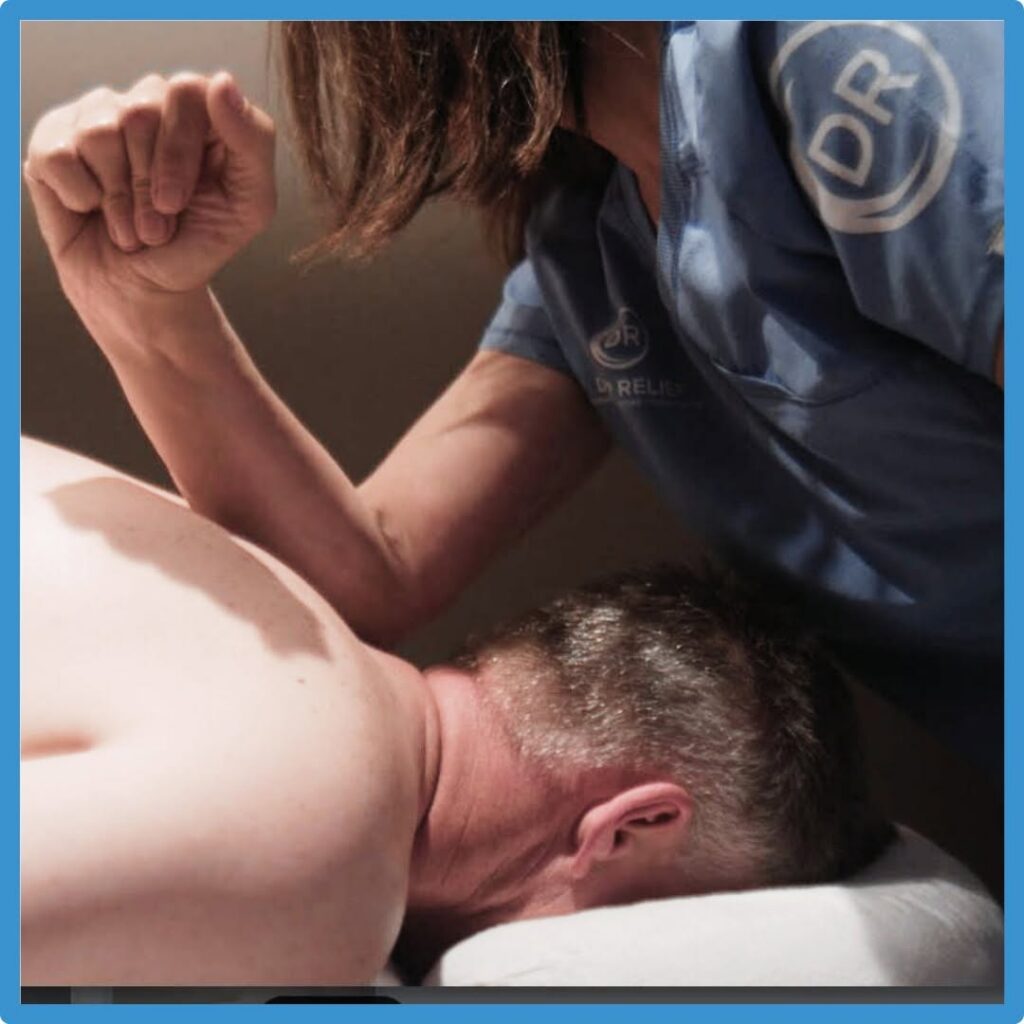
Our Perfect Pressure Number System is not only useful for deep therapeutic work. For sessions aimed at winding down, getting the pressure right matters just as much, since pressure that is too intense can leave someone tense rather than relaxed, and pressure that is too light may not do much to release real tension at all.
Checking in throughout the session, rather than setting pressure once and leaving it, keeps the session working toward what the visit is meant to accomplish.
For tension that builds up consistently, whether from a physically demanding job, a stressful stretch at work, or a body that tends to hold stress in the same places, a single session usually offers temporary relief rather than a lasting change.
Clients who come in on a regular schedule, whether that is every few weeks or monthly, tend to see the tension pattern shift over time rather than returning to the same starting point each visit. Our DR Wellness Plan is built around this kind of consistency, since ongoing care produces different results than an occasional visit.
Many of our clients notice they sleep more soundly the night of a session focused on tension relief, particularly after deeper work in the neck, shoulders, or back. This is a reasonable outcome to expect when significant muscle tension has been addressed, though ongoing sleep difficulty unrelated to physical tension is better addressed with a physician.
What our massage sessions can consistently do is take the physical tension piece off the table, which for a lot of clients turns out to be a bigger factor than they initially expected. If you would like guidance on getting the most from your visit, our guide to preparing for your session covers what to expect and how to prepare.
We hear a handful of the same questions from clients considering a session for sleep and tension relief. Here are the ones that come up most often.
For many clients, yes, particularly when the sleep difficulty is tied to physical tension in the neck, shoulders, or back rather than an unrelated medical cause. Reducing that tension often makes it easier for the body to settle at night.
It depends on what is driving the tension. Deep tissue work through our DR Hit The Spot™ method is appropriate for chronic, specific tension patterns, while our Signature Relaxation Massage suits clients who want a gentler, full-body approach focused on winding down.
Most clients start with sessions every few weeks and move to a monthly maintenance schedule once the tension pattern improves. We can help you figure out the right frequency during your first visit.
We are located at 7101 State Hwy 71 Ste A-1, Austin, TX 78735, next to Wells Fargo at the Y in Oak Hill. Call us at (512) 529-0027 to schedule, or reach us Monday through Friday from 10 a.m. to 7 p.m. and Saturday and Sunday from 10 a.m. to 6 p.m.