
Quick answer: Aging joints and less elastic muscle tissue mean older clients need slower pacing, lighter entry pressure, and more warm-up time than a standard massage routine provides. At Deep Relief in Austin, we adjust bolstering, positioning, and depth for senior clients, and we take a detailed intake covering medications and physician-managed conditions before every session.
Pain in a seventy-year-old body does not behave the same way it does in a thirty-year-old one. Treating it the same way is, honestly, one of the more common mistakes in the massage industry. Joints that have carried decades of wear respond differently to pressure. Muscles that have lost some elasticity need a different pace just to warm up properly.
We built our approach specifically with those differences in mind. Working with an experienced massage provider means the method gets adjusted, not just the pressure. It is not about softening the same routine used on everyone else. It is about actually rethinking how the session is structured from the start.
A lot of what brings older clients to us is not one dramatic injury. It is the slow buildup of stiffness, reduced range of motion, and joint discomfort that creeps in gradually. It can be gradual enough that people assume it’s just something they have to live with. You know, we do not think it has to be.
As the body ages, muscles naturally lose some elasticity, and joints used for decades often show wear that changes how pressure needs to be applied. Someone in their seventies dealing with shoulder tightness usually has a different underlying picture than someone in their thirties with the same complaint. Arthritis, reduced circulation, or muscles that take longer to respond to touch because they’ve become less pliable over time may be involved.
This means a session that would feel appropriate for a younger client can feel jarring or even counterproductive for an older one if the pressure and pacing aren’t adjusted. We spend real time in the intake conversation understanding what’s changed recently, what conditions a physician is already managing, and what specific movements or activities have become harder. That information guides the entire session before we even touch the table.
A lot of massage clinics run every client through the same general routine regardless of age. That works fine for people in reasonably good health, but it often misses the mark for older adults. Pressure calibrated for a younger, more resilient body can bruise or overwhelm tissue that just needs a gentler introduction. Speed matters too, maybe more than most people think.
Muscles in an aging body typically need more time to warm up before deeper work makes sense. Rushing that step can do more harm than good. Deep relief massage, when done right, actually accounts for this, giving the body time to respond before the therapist moves into more targeted work.
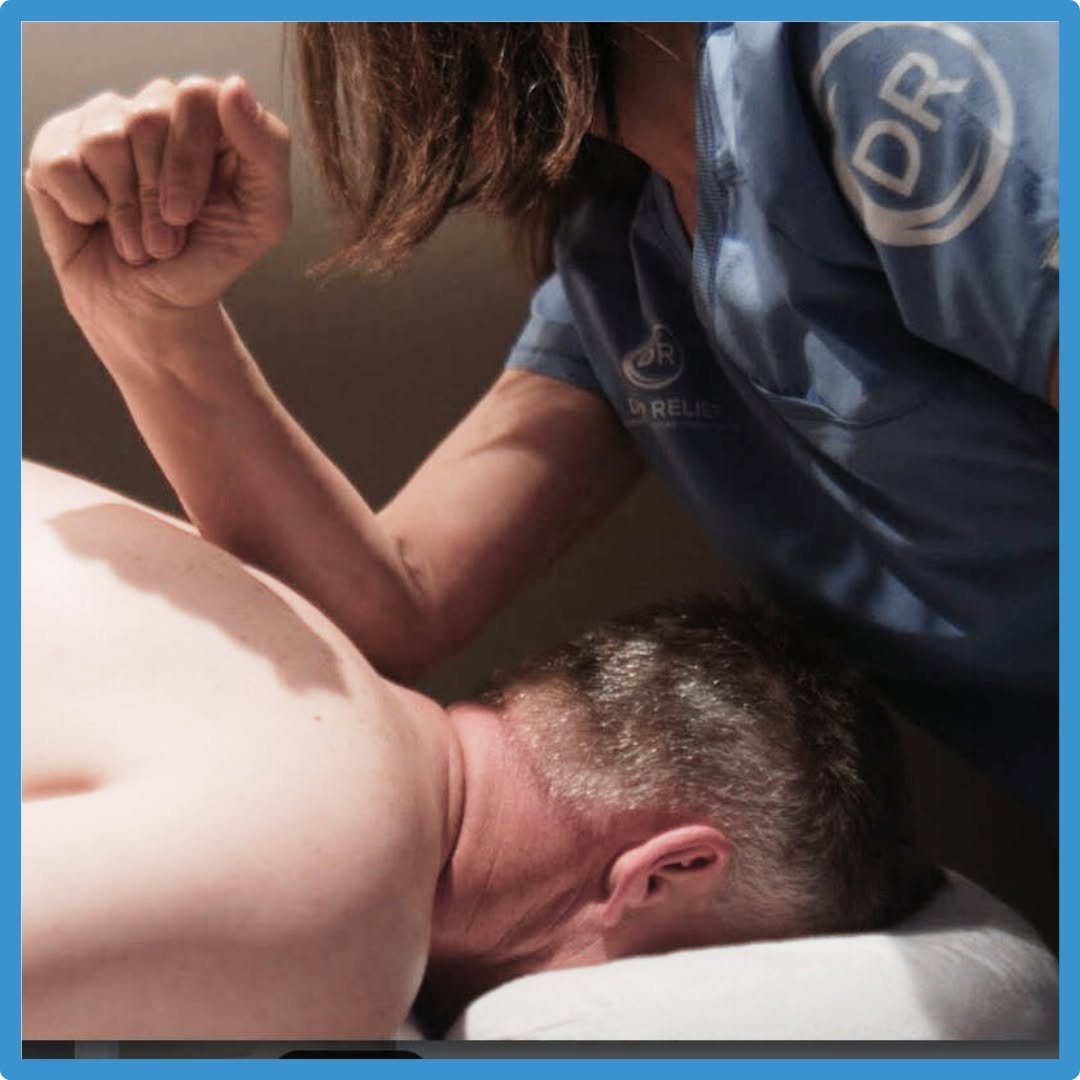
There’s also the matter of positioning. Clients with limited mobility, joint replacements, or balance concerns often can’t comfortably lie in the same positions a younger client would use without issue. Our therapists adjust bolstering, table height, and transitions specifically to keep older clients comfortable and safe throughout the entire visit, not just during the massage itself.
If stiffness or joint pain has kept you away from massage before, give us a call at (512) 529-0027 and let’s talk through what a senior-adjusted session could look like for you.
We still use the same foundational approach for everyone who comes to see us, working through specific zones of the body in a consistent sequence rather than an improvised routine. For senior clients, though, we slow the pace considerably and spend more time in the warming phase before introducing any deeper pressure.
The goal is to give the tissue time to actually respond instead of forcing depth before the muscle is ready for it.
We also lean more heavily on communication throughout the session. Rather than assuming a set pressure works for the full appointment, we check in frequently, since comfort thresholds and pain tolerance can shift from session to session for older clients managing chronic conditions.
Our signature deep tissue work gets modified accordingly, with lighter entry pressure and a more gradual build than we’d use with a younger, more resilient client.
Arthritis shows up constantly in our older client base, particularly affecting the shoulders, hips, and lower back. Massage won’t reverse the joint changes that come with arthritis, but it can meaningfully reduce the surrounding muscle tension that often makes arthritic pain worse than it needs to be.
We also see a lot of general stiffness tied to reduced activity levels, along with lingering tightness from old injuries that never fully resolved decades earlier.
Sleep issues come up more often than people expect, too. Chronic discomfort makes it hard to get comfortable at night, which then makes the muscle tension worse the next day, and the cycle continues. Addressing the physical tension directly often helps sleep quality improve as a secondary benefit, even though that wasn’t the original reason someone came in.
Massage alone doesn’t always cover everything an aging body needs, which is why we built our clinic around more than one type of care. For clients managing joint-related discomfort alongside muscle tension, we often recommend pairing massage with gentle chiropractic care, which uses a lower-force approach appropriate for clients who prefer to avoid high-velocity adjustments or who have bone density concerns.
For inflammation tied to arthritis or old injuries, cold laser therapy offers a non-invasive option that doesn’t require the same manual pressure massage does, which can be especially useful on days when deeper work isn’t the right call. Acupuncture rounds things out well for clients dealing with nerve-related discomfort or the kind of generalized tension that doesn’t respond as well to muscle work alone.
Every senior client fills out a more detailed intake than we’d typically use for a younger, healthier client, covering:
We’re not trying to replace medical care here. We’re trying to make sure the massage we provide fits safely within whatever plan a client’s doctor already has in place.
We also ask directly about balance and mobility limitations so we can adjust how a client gets on and off the table, and we build in extra time for transitions rather than rushing between positions. It’s a small detail, but it makes a real difference in how safe and comfortable every visit feels from start to finish.
If age-related stiffness, arthritis, or reduced mobility has been shaping how you move through your day, a senior-adjusted session at our Oak Hill studio might help. Call us or stop by 7101 State Hwy 71, Ste A-1, Austin, TX 78735, right next to Wells Fargo, to talk through what’s changed for you and book a visit suited to your pace.