

Dry needling is considered a low risk treatment in trained hands. Most of what makes it safe happens before the first needle. Florida regulates who may perform it and what training they need, which gives patients something concrete to check rather than a reputation to trust.
We treat pain and movement problems at our treatment based practice in Nokomis, FL, where patients can also book reliable massage services for the hands on recovery work that supports needling between sessions. We publish our policies so that patients can hold us to them. The questions below are worth asking any provider, including us. Asking them is not rude, and a practitioner who bristles has told you something useful.
The common side effects are minor and short lived. Soreness at the needled spots, small pinpoint marks and occasional light bruising account for most of what patients report. Some people feel tired or lightheaded for a short period afterward, particularly after a first visit. These settle without intervention in the large majority of cases.
Serious complications are rare, and the ones that matter relate to anatomy rather than to technique in the abstract. Needling near the ribcage carries a small risk to the lung if depth and angle are wrong. Needling over a blood vessel, or in someone taking anticoagulants, raises the bruising and bleeding picture.
Training exists to manage these, which is why the credential question matters more than the technique question. Traditional acupuncture is a safe option in the hands of a licensed practitioner who knows where the depth limits sit, and our wider treatment menu exists partly so a patient who should not be needled still has somewhere to go.
This is where patients are most often misinformed. Chiropractic physicians in Florida gained authorization to perform dry needling for trigger points and myofascial pain effective June 26, 2024. The authorization arrived with conditions attached rather than as blanket permission. A chiropractic physician must complete a 40 hour in person certification course approved by the Board of Chiropractic Medicine. The Board must then certify them before they needle a patient. That requirement drops to 24 hours for a chiropractic physician already certified in chiropractic acupuncture.
The rules go further than coursework. Online and distance based courses do not count toward that certification. The Board also requires supervised patient sessions and documented competency before certifying anyone.
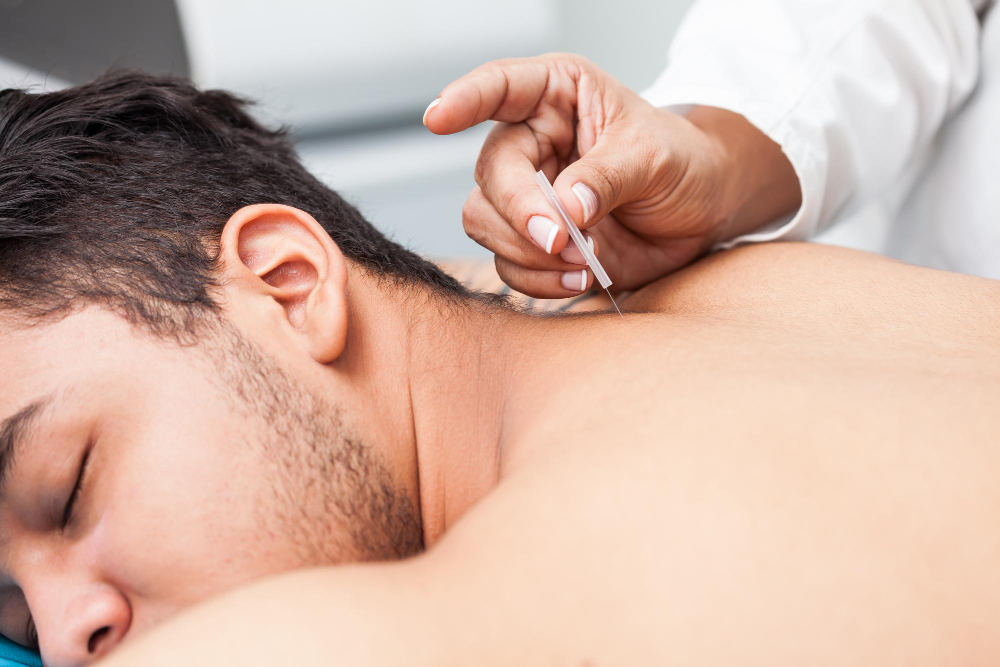
Patient consent, with education about risks and adverse events, is written into the standard itself. Licensed acupuncturists have had needling inside their scope in Florida for far longer. Physical therapists sit under a separate statute with its own training requirements.
Not sure whether needling suits your situation? Call (941) 451-5558, and we will tell you if another approach fits better, including when the honest answer points somewhere other than this clinic.
Every one of those requirements is verifiable by the public. The Florida Department of Health runs a license verification tool covering health care providers statewide. The Board of Chiropractic Medicine publishes its dry needling certification requirements directly. A lookup takes about a minute and shows the license type, its status, and whether any discipline exists against it.
Three questions are worth asking when you call any clinic, ours included. Which license does the person needling me hold. If they are a chiropractic physician, are they certified by the Board for dry needling specifically. How many of these have they performed? A practice that answers plainly is giving you the information the state intended you to have, and a practice that deflects is worth leaving.
Your history changes how a session gets run, and some of it changes whether needling happens at all. Raise these at booking rather than on the table, since several affect how much time the visit needs.
None of that list is automatically disqualifying. Most of it changes the depth, the area or the dose rather than canceling treatment. A practitioner would far rather hear it before starting than find it out halfway through.
Some regions get treated more conservatively by any competent practitioner. The upper back, the area around the shoulder blade and the chest wall all sit near the lung. Angle and depth there get adjusted rather than guessed at. The front of the neck holds a dense cluster of vessels and nerves close to the surface, and needling near a recent surgical site usually waits until the area has settled.
Certain patients call for the same caution for different reasons. Significant osteoporosis, advanced arthritis and fragile skin all show up regularly in our market, since Southern Sarasota County skews considerably older than the national average. Anyone in that position should expect a slower, more conservative session rather than a standard approach applied to everybody.
Much the same logic answers the question of who should avoid deep tissue massage? and it is worth raising with us before your first visit so the pressure and technique match what your body can handle comfortably.
Some regions get treated more conservatively by any competent practitioner. The upper back, the area around the shoulder blade and the chest wall all sit near the lung. Angle and depth there get adjusted rather than guessed at. The front of the neck holds a dense cluster of vessels and nerves close to the surface, and needling near a recent surgical site usually waits until the area has settled.
Certain patients call for the same caution for different reasons. Significant osteoporosis, advanced arthritis and fragile skin all show up regularly in our market, since Southern Sarasota County skews considerably older than the national average. Anyone in that position should expect a slower, more conservative session rather than a standard approach applied to everybody.
That care is what makes a long term pain relief plan work for patients whose bodies need a gentler pace, and much the same logic decides who is not a good candidate for firm bodywork.
In trained hands, dry needling is considered a low risk treatment. The most common side effects are soreness, small pinpoint marks and occasional light bruising, and they usually settle on their own. Serious complications are rare, and the training required is there to manage them.
Use the Florida Department of Health license verification tool. It shows the license type, its status and any discipline. If the practitioner is a chiropractic physician, ask whether the Board of Chiropractic Medicine has certified them for dry needling specifically.
Often, yes. Blood thinners, pregnancy, an implanted device, recent surgery and the other items on the list above are not automatically disqualifying. They usually change the depth, area or dose rather than ruling treatment out. Tell us when you book, so we can plan the visit properly.
Yes. Single use sterile needles come out of a sealed package in front of you and go into a sharps container straight after use. They're never reused.
A safe session starts long before the first needle, with clear credentials, an honest conversation about your health and a practitioner who explains every step. Give us a call at (941) 451-5558, and Deep Relief in Nokomis welcomes your questions and tells you plainly whether needling is the right fit.