
Low back pain is often produced by muscles sitting above, below, or in front of where you feel it, which is why pressing on the sore spot rarely changes much. The usual contributors are the quadratus lumborum at the waistline and the gluteal group in the hip.
Piriformis sits beneath the glutes, and psoas runs deep through the front. Licensed, insured therapists who deliver professional massage therapy in Nokomis work from a protocol built around seven regions and their referral patterns, trained in that method past state licensing. Low back complaints are the most common reason adults in Venice, Nokomis, Osprey, and Laurel book a visit.
Why the Ache Is Rarely Where the Problem Lives
Referred pain means sensation turning up somewhere other than its source. A muscle under sustained tension can produce an ache several inches away. Sometimes it produces one down a limb entirely. The brain is not especially good at telling you which is which. That gap sits between where a client points and where a therapist works.
Our DR Hit The Spot protocol exists to close it, organizing hands-on work around seven regions known to generate common referral patterns. Two of them are the waistline and the hips and glutes. Each region maps to the muscle groups involved, so a therapist who knows the patterns looks upstream rather than parking on the symptom.
The Quadratus Lumborum and the Waistline
The quadratus lumborum runs between the lowest rib and the pelvis on each side. It does a great deal of quiet work holding you upright. When it tightens, the ache tends to sit low and to one side. Clients often describe a belt of tension across the waistline rather than a point.
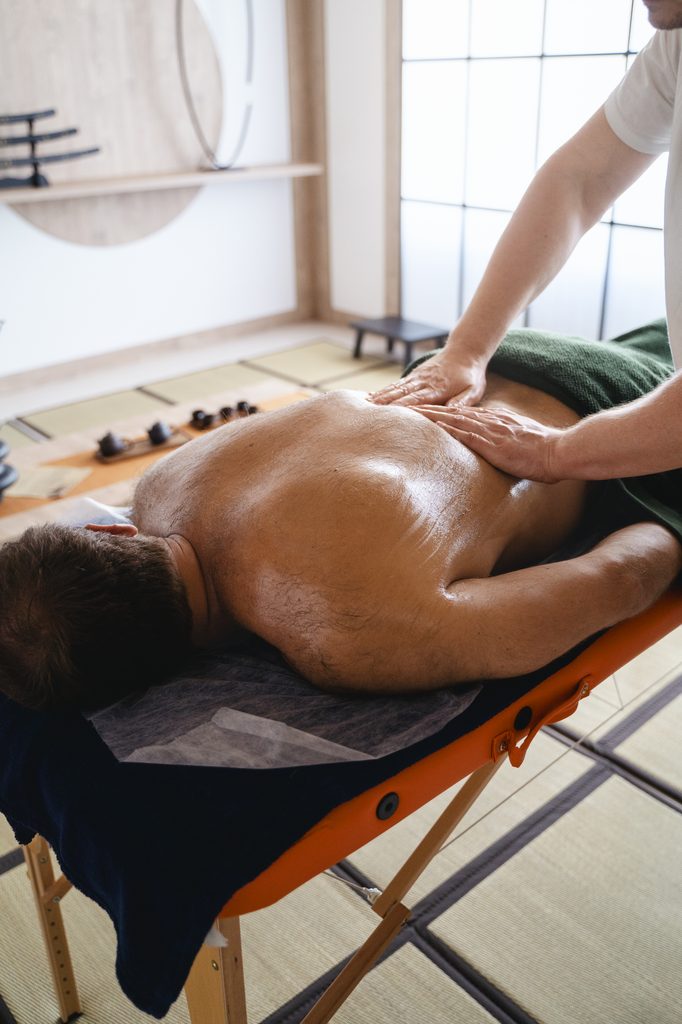
It is a frequent culprit for anyone who stands asymmetrically or carries a bag on one shoulder, and a day of yard work with a twist in it does the same thing. Slow muscle stripping along the fibers and sustained contact at the attachments is how therapists reach it. The work feels deep rather than sharp, and clients are often surprised that relief came from pressure applied well off to the side. The wider map is easy to follow through the body areas addressed during a session at a typical visit.
Hips, Glutes and the Piriformis
The gluteal group and the piriformis beneath it refer sensation in patterns easy to mistake for a back problem. Tightness here can produce an ache across the back of the pelvis. It can also send sensation traveling down the back of the leg, and plenty of clients arrive convinced the trouble is spinal. Untangling that is routine in our Venice deep tissue sessions, where the hip gets checked before the back is worked.
Below is a rough map of what tends to refer where. Treat it as a starting point rather than a diagnosis.
| Muscle | Where it commonly refers | Often aggravated by |
| Quadratus lumborum | Low back, one side, toward the hip | Standing, twisting, carrying |
| Gluteus medius | Back of the pelvis, upper outer hip | Walking, stairs, single leg load |
| Piriformis | Buttock, sometimes down the back of the leg | Prolonged sitting, driving |
| Psoas | Front of the hip and deep low back | Sitting, hip flexion, sitting up |
Ashiatsu suits this region particularly well for clients wanting broad sustained pressure. The therapist works with feet, body weight, and gravity rather than elbows and thumbs.
The Psoas and What Sitting Does to It
The psoas runs from the lumbar spine through the pelvis to the top of the femur. It crosses the front of the hip, which means it shortens every time you sit. Long drives, long flights, and long desk days leave it that way for hours. When it does not lengthen again, it can pull on the low back from the front while the pain registers at the back.
This muscle explains why so many low back complaints respond to work that never touches the lumbar spine. The tissue sits deep, so a client holding their breath makes the work less productive, which is why breathing techniques during a session matter more here than in most regions.
Pointing at one spot and getting nowhere? Give us a call at (941) 451-5557, and we’ll route you to the right session based on a description of what provokes it.
What a Session for Low Back Pain Actually Covers
Expect the work to range wider than the painful area. A typical session moves through the waistline, the hips and glutes, and often the upper back. These regions interact, so treating one in isolation tends to hold for days rather than weeks. Fifty minutes covers one or two regions properly, while eighty gives room for the full pattern.
Your pressure number gets set before anything starts and checked while you are on the table. That matters a great deal in the hip, where deep work can shade into unproductive territory fast. A deep tissue massage approach works well here, since slower, targeted pressure holds up better than quick general strokes. Some clients notice mild soreness for about a day afterward, similar to a new workout. Sharp or lasting pain is not something to expect. Mention it during the session rather than afterward, since that is when it can still be adjusted.
When the Plan Changes
Sometimes soft tissue work is not the whole answer. If the complaint ties to how the area moves rather than general tightness, orthopedic massage becomes the better route. It targets muscles, fascia, and joints behind restricted motion. Where a trigger point keeps resisting hands-on work, dry needling reaches it directly. Chiropractic care sits alongside soft tissue work when joint restriction is part of the picture.
Swelling changes things too. Clients managing fluid retention, or recovering around a surgical procedure, may be better served by lymphatic drainage sessions. Those use light rhythmic strokes and follow whatever timing a surgeon has specified. Bodywork supports medical care rather than replacing it, so mention any diagnosis or medication when you book. Availability of add-ons and specialty services depends on which practitioners are currently on staff.
Bring the whole story, not just the sore spot. Call (941) 451-5557 or stop by 271 S Tamiami Trail, Nokomis, FL 34275, and tell us when it started, what makes it worse, and what you want to be able to do again.
Related Topics: